Day Fifty One

Collapse of stout party... total silliness


When I was 60 I decided to throw a small party but Napoleon wasn’t available.
The first thing was to decide what food to serve.  George, the guy who lives on the 32nd floor offered to make BBQ  beef but I told him the steaks were too high.
I always like to seafood,  I remembered seeing an advert for extremely cheap fish but there had to be a catch. 

Everyone’s  favourite soup was one made from root vegetables, they agreed my 24 carrot soup was real gold.

My best friend Tony requested jelly with cream and custard.  I gave in because I didn’t want to trifle with his affections.  


 Someone else wanted cheese and crackers, a great idea, I love fireworks.

A lot of my friends offered to bring edible contributions. 

Ruth said she’d bring Devils on Horseback but I didn’t think the apartment was big enough for 24 ponies.

Jenny, who’s vegetarian suggested crudités but I wanted to keep the party clean. For the same reason I rejected the Bakewell tarts.


Mary whined about the Sauvignon Blanc,  Bill requested a mixed fruit drink but I knew he was an ex-boxer and could get a bit punch-drunk.
 Joe said the beer was too small but I didn’t plan to serve  coffee as I wished to stay grounded.

There were many reminders that I was getting older.  Maria brought a beautiful cake, shaped like a  clock. Eating that was time consuming. 


Eloise gave me an egg timer but when I tried it out, it lasted only a minute. Obviously it was filled with quicksand.
My colleague from work is a musician, always an upbeat lady, she asked me not to serve fish; she doesn’t like the scales.  She brought a gift of herbs with the note ‘Thyme is money.’

Ajit brought Vindaloo but I knew he was only trying to curry favour. It was a chilli day and he advised me to wear warm clothes. That was silly, I don’t own cold clothes.

My brother likes to remind me of my age so he gave me a calendar - its days are numbered and my dopey cousin Tarren, stumbled in looking vague and said, ‘I got past and future covered but I forgot the present.’

My casting director mate arrived with a plate of plum rolls. He’s doing well making gritty movies about sand. Even his little son is playing miner roles.

 He once got himself into a pickle, walking up and down advertising preserved vegetables.  His next job was sweeter, he got into a jam.

To preserve that job he had to eat so much of the product that his teeth started to rot. He didn’t mind, he told me he’d been to his dentist so many times he knew the drill.   


It looked as if we’d have a full house except for my friend Angela Marlin. I said I’d tell her all about it next time dropped her a line.

The only fly in the ointment was Mosquito, Peter’s dog who had an accident on the hall carpet, a real party pooper.

Despite all that, the party went with a swing - it had to be returned to Ralph’s garden.


 Stay alert! The world needs lerts.

Day Fifty

The Mothers of Invention


Wherever you are in the world, you own, are probably using, or can see something invented by a woman.
  
Women have been inventing since time began but so often were not allowed (sometimes by law) to claim or patent their ideas and machines. 

In order to get something useful onto the market, they had to ask aman to register it.  Black women inventors had to resort to asking white men to help.
Ellen Eglin

Ellen Eglin (b.1849) invented the mangle or clothes wringer. 
At that time, laundry was washed by hand in a tub of hot, soapy water, scrubbed on a washboard and then wrung out. Then repeat to rinse.   Even large, linen bed sheets, curtains and huge, banquet  table cloths were processed this way.

Ellen knew if white women were aware a black woman had invented such a device they wouldn’t buy it and hard-working laundry maids across the USA would be deprived of something she knew would make their lives easier.  So with a remarkable spirit of altruism, she decided to sell, for a mere $18, “to a white man interested in the idea.”
The mangle went on to be a world-wide best seller, revolutionising not only laundry but much more.
Nurse Caroline Halstead

William Halstead is named as the inventor of rubber gloves but it was his wife, Caroline (1861-1922) a nurse who, having developed dermatitis at work, suggested he develop this idea. 
They worked.  Caroline used them in the operating theatre ever after, often to the scorn of surgeons who did not even wash their hands between patients.


Josephine Cochrane, (1839 –1913) the daughter of an engineer,  invented a commercial dishwasher after the hostess at a party complained her crockery had become chipped. 


As we switch from plastic bags (forget all those disposable gloves in landfill) to paper, we have Margaret Knight,  (1838-1914) to thank for the flat-bottomed paper bags which, with any luck, won’t deposit your leaking milk bottle and eggs on the pavement as you walk home. She also invented the machine which constructed them; the sash window and numerous other devices, including an Internal Combustion engine.
 She is not even mentioned on the Wikipedia page which covers that, only men are listed but here’s the proof.
Knight's Combustion engine


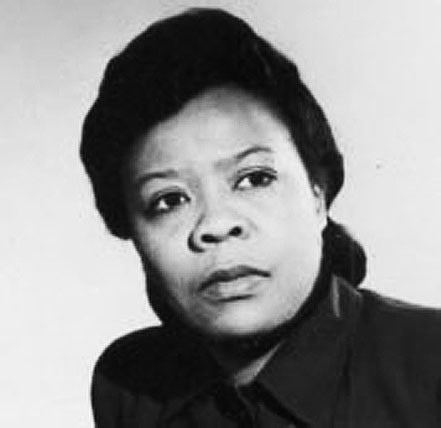
Ever wondered why we say ‘there’s a bug in the system’ when  computers go wrong?  That’s thanks to  Grace Hopper, a brilliant mathematician.  She devised a ‘compiler’, the first software,  which gave computers instructions.

 She once found  a moth in the Harvard Mk 1, seen above, hence the word debug.
Her inventive ideas were not popular with male computer programmers, then using only hardware. Grace suggested ‘software’ was the answer to their many problems
Grace and the unhappy men from Harvard
 Undeterred, Grace worked on her innovations, offering the mathematical solutions to a few leading computer programmers.  She was soon inundated with requests.  Thus inventing both Open Source and the first effective ‘software’, later named COBOL.

People who love tropical fish have Jeanne Villepreux-Power (1794 - 1871) to thank for the aquarium. 
A marine biologist, wanting to study the Nautilus, she was convinced, against popular opinion that it made its own shell. She proved this.

The Landlord's Game, invented to teach the (sometimes evil) ways of Capitalism was the brain-child of Elizabeth Magie (1866 –1948) a game designer who  patented the idea in 1904.
It was not only a teaching device but a popular party game and at one of Magie’s dinner parties, Charles Darrow and his wife so enjoyed it, he asked for the rules.  He then went on to change it slightly and “invent” Monoply.
Myra Juliet Farrell

Australian Myra Farrell  1878 –1957) at just 10 years old, had the idea of the self-locking safety pin. She  patented many inventions: a folding pram hood, a method for automatically picking fruit, a baby sling and a press stud which doesn’t need stitching.

Also in the realm of baby care: Susan Olivia Poole 1889–1975, of Ojibway/Chippeway heritage observed how mothers would tie babies securely into a ‘papoose’ and hang this from flexible branches so the bouncing motion soothed the child.  Thus was born The Jolly Jumper, used and enjoyed by millions of babies around the world, mine included.


The wonderfully named Eldorado Jones, 1860–1932 invented a muffler to deaden the noise of aeroplanes.  People living near Heathrow  and Gatwick should probably alert the airlines about this 1931 invention.

Nicknamed, ‘The Iron Woman’ who mainly employed female worker over the age of 40 in her factory,  she also gave the world a lightweight electric iron, a travel-sized ironing board and an anti-damp salt shaker (whatever happened to that brilliant idea?)


Patrician Bath, pioneering Opthalmologist
Opthalmologist, Patricia Bath 1942 – 2019) developed and pioneered laser surgery for cataract removal, including improvements to the laser probe which delivered it.

How many military and police lives have been saved by the bullet resistant, stab-proof vests and combat helmets?

That’s thanks to Stephanie Kwolek (1923 –2014) and her invention - Kevlar.

Chemist, Stephanie Kwolek
Kevlar is heat resistant and many times stronger than steel.  
In an interview, Kwolek, stated:
Once senior DuPont managers were informed of the discovery, they assigned a group to work on it.”        The group did not include its inventor.

 DuPont and not Ms Kwolek profited from her invention, although they gave her a medal.
Kevlar  is used in a myriad ways including:  combat gear, parachute lines, fire fighters’ boots, cut-resistant gloves and armored cars, bomb-proofing, hurricane rooms and bridges as well as in many sports applications.


Women inventors also gave us:  fire escapes (Anna Connelly); life rafts (Maria Beasley); Solar Heating (Maria Telkes and Eleanor Raymond); the refrigerator (Florence Parpart).
Florence Parpart proudly shows her fridge 

 Alice Parker invented central heating) and  Ada Lovelace, daughter of the dissolute poet Lord Byron, came up with the algorithms which allowed computers to change the world.

 Maria van Britten Brown made a safer world when she invented Closed-circuit  TV as a result of the slow-response of police to call outs in her area.
Maria Brown inventor CCTV

.
Women have been pioneers and inventive in every single walk of life and I could fill a book with their amazing discoveries (and many authors have).


Just one question. 


We have coffee filters (Melitta Benz) fridges, irons, ironing boards, dishwashers to make domestic life easier but why hasn’t someone invented a kitchen-sized,  reasonably priced automatic multiple potato peeler?  
Day Forty Nine

Wake me early Mother, for I'm to be Queen of the May...


In the third week of May, Whetley Lane Infant’s School in Bradford, prepare for May Day.

Like all the girls in our class, I longed to be May Queen but who would choose a dumpy 6 year old with short, dark hair over the willowy girls with blonde hair almost as long as Rapunzel’s?  
But I was chosen to be an Attendant and was overjoyed.
I'd been a bridesmaid to my Auntie, so already had a dress

Naturally, all the girls were excited about May Day: dressing up, parading down the road in our finery,  dancing round the Maypole all appealed to us.

By coincidence, these were all the things the boys hated.

Our teacher tried to make the traditional dances sound macho, explaining it took stamina to dance ‘Knives and Forks’, ‘Fourpence Ha’penny Farthing’, ‘Strip the Willow’ and the wonderfully disgusting  ‘Dick’s Maggot’.

Colin the rebel said.  ‘ I’ll do yon Dick’s Maggot one but I'm not dancin’ owt else, it’s fer lasses.’ 
This encouraged rebellion by the other boys.

Our teacher was wise; she didn’t argue.  The next thing we knew, the Headmistress was standing before us, looking at the dissidents over her spectacles.
 ‘I understand some of you don’t want to  practice the May Day dances.’

‘Aye, it’s soft.’ said Colin, bravely as we all quaked; none of us would dare to cheek a teacher, let alone the Headmistress.

Mrs Twizleton was unmoved.  ‘These dances are part of our heritage and men as well as girls have danced them for hundreds of years. Ask your fathers. I taught them all and they danced.’
Deprived of this usual Court of Appeal, the boys gave in.

Maytime was when Nature came into her own after a long, hard winter and thanks to caring teachers, city children learned about woodland flowers and trees, things they never saw in their day-to-day lives.
Miss Sym brought large bunches of bluebells and daffodils to school for our Nature Table and they filled the room with their fragrance.

 She explained that like all things in nature, they were gifts from God.

Maureen put up her hand, ‘Please Miss, did God bring 'em  to your house, like Santa brings toys at Christmas?’

‘Don’t be daft,’ Colin was scathing. 

 ‘No, not quite,’ Miss Sym ignored the critic, ‘I picked them in Bingley Woods.’
‘Did God say you could?’ asked Stephen.
Our teacher looked disconcerted, ‘Well, not quite Stephen but….’

Bluebells in Bingley Woods 

‘So you pinched 'em Miss?’ He looked scandalised, ‘me Mam says you musn’t take stuff wots not yourn.’
’And she’s quite right, we must never take things which don’t belong to us, that’s stealing  but God made these flowers for us all to enjoy, so we are allowed to pick them.’

‘That can’t be reight,’ Colin always had a comment, ‘I picked some tulips from West Park for me Mam’s birthday, ‘an Parky came and told me Dad and I got strapped fer it.’

The week before the May procession, we made tissue and crepe paper flowers to decorate our bikes, trikes, prams or scooters.
‘Can I ‘ave black tissue paper fer my scooter?’ asked Jim but was disappointed.  ‘Grey then, or brown’ll do.’ 

Inevitably, Colin’s hand went up ‘Please Miss, I don’t ‘ave a bike an me brother‘d nivver gi’ me a lend of his.’
 ‘Don’t worry about that,’  Miss Sym, always kindly, reassured him, ‘I’ll arrange something.’
So Colin, whistling happily, set about making  ‘sissy’crepe flowers.


For the next couple of days we wound blue, green and yellow crepe paper around the frames of trikes and scooters and glued paper flowers and streamers to the handles and wheels of prams until they were almost completely hidden under a paper garden.

Colin had the loan of a splendid bike and took great pains to decorate it in red, white and blue, showing great artistic and patriotic  flair.

On May Day, we turned out in our best, so excited we could hardly contain ourselves and many trip to the lavvy were necessary.

Children without shoes had been given plimsolls from Lost Property and the poorest, often dressed in ragged clothing, inadequate for the weather and several sizes too big, were given white, Crusader-style  tabards tied with a bright ribbon.


The May Queen,  holding a bouquet of real, rather than paper flowers, led the procession from our classroom to the main road, her crown of honeysuckle and lilac scenting the air.  We Attendants held up her blue velvet train and looked proud.

 Behind the royal party came the rest of the school,  pushing their bikes, trikes, prams, scooters or carrying hoops festooned with paper flowers and singing lustily.

Every Mum and Grandma and even some Grand-dads came out to watch and there were calls of: ‘Eee, don’t they look grand?’
And
 ‘You’re reight little Bobby Dazzlers.’

Several of the older ladies who had done exactly the same walk in their youth,  wiped tears from their eyes.
Our  procession then made its way back to school and many of the spectators followed to watch the Maypole dancing.
Even Dick’s Maggot went well.

Colin’s father, standing at the back in his old army greatcoat, applauded enthusiastically when his son danced Dick's Maggot and Colin’s expression, formerly acute embarrassment, changed to pride.


Day Forty Eight:


Amartia’s Adventure - Part Two

It was three weeks  before Amartia gathered enough courage to leave the house again.  The children were at school, Berkit working and she had hours to herself. She would find the mountain.

It took her most of that day just to gain the soft, green pasture that led to its first slopes and when, as the sun lay low and golden across the grass,  she returned,  it was to a family fraught with anxiety -  and a police officer who told Berkit to keep a sharper eye on her in future.
But there was, at last, the beginnings of peace in Amartia.

As time passed and the children succeeded at school, she began to love the mountain more and more.  She persuaded Berkit to move to the edge of town, where from her kitchen window she could see the slopes climbing into the soft haze of sky.

At weekends, she would clamber through the daisied meadows and walk the goat tracks which rose steeply to the rocks above.  


Within the year,  she’d gain the courage and stamina to reach the peak and felt as if she’d ascended to heaven.
Standing on the summit, the cold air razor sharp in her throat, Amartia lifted her arms to the sky - then sunk down with her head against the hard rock face and wept. 

Berkit and the children had learned the new language quite quickly but try as she might, all understanding evaded Amartia.
 It was as if her brain was incapable of retaining even the most elementary means of communication.
When kindly people took her to social events and tried to converse, she watched their expressions turn quickly from sympathy to impatience, even anger.
How long would it be before they sent soldiers?

At meal times the family spoke their own dialect but later, around the television, the children would chatter in the same incoherent speech as the screen and their father would say something which made them laugh and Amartia would look, half smiling from one to the other, hoping to understand or be included in their jokes. 

Occasionally, other women from her homeland came to visit but they were strangers and had little in common, and fear is not a good basis for relationships.

Although she was beginning to feel more and more isolated from her family, she could not but be pleased that her children were settled and happy.   Her eldest son even had a girlfriend.  Berkit was valued in his work and promoted.

Amartia tried hard to remember all this when her husband accused her of not trying.
She was trying, she was trying very hard but in this race to belong, to be winners, they were all so much swifter than she - and without knowing it,  had long since left her behind. 

She bought a small tent and a sleeping bag and every now and then, perhaps when Berkit was away on business, Amartia would spend a night with the mountain. 

They conversed gently and long after sunset and as the nocturnal birds hunted in swift silence across the rocky outcrops and sheep bleated far below,  they fell asleep, contented, in each other’s arms. 
 
The family became used to her eccentric but harmless preoccupation with the mountain and Berkit referred to her trips indulgently as ‘Amartia’s adventures.’

At the beginning of their tenth year in The New Country, when her eldest boy announced his intention to marry, Amartia’s heart leaped with pure delight. 

Berkit would find the couple a small house nearby and she would help her new daughter-in-law, maybe at last learn enough of the strange language to converse.
And there would be grandchildren for her empty arms.  She would no longer be alone.                       She felt like singing.

But first the wedding.  
They would invite the other ex-refugee families.
 The women would laughingly invade her kitchen, help prepare the traditional foods and explain to the bride the traditional and interesting wedding customs of their country.

The men would gather together to rehearse and after the marriage they would all sit around a huge fire, shouting, drinking brijski, playing the old music and telling tall tales.


In this atmosphere of festivity and peace, Amartia might even find the courage to face the haunting ghosts of her past.

But the young man, with his father’s approval, had decided upon a modern,  ten minute ceremony in an air-conditioned office and then, with rapid goodbyes, left with his wife  for their new home and jobs, two hundred miles away.


‘You must understand,’ Berkit had told her, ‘our children are citizens of this country now, and that’s the way they do things here.’
Amartia went to the mountain and the mountain held out its arms and she wept on its broad and comforting breast.

A slight mist veiled the town as Amartia, wedding sorrow now behind her,  resumed her climb, the pack bumping against her shoulder as she sought to keep her footing on the scree of the steepening slope. 
The grass gae way to rock but the goat path was easily visible and she continued on.  

Berkit had left for a conference that morning and would be away six days;  the younger children, not children anymore really, were away skiing with friends in the first of the winter snows. 

She was so proud of them, the way they had re-made their lives after the horror, the way they had fitted in, made friends, trusted this country.   

She could trust only this mountain, and as she strode steadily upwards to the snowline, the sun began to set, dusting the snow with rose and gold.

By the time she reached 'her place', most of the light had left the sky and above her was a shroud of silver stars in the deep, vibrant blue.  

Amartia  spread out her blanket and sat with her back to the mountain, whose friendly rocks still retained a little of the day’s winter warmth.

From her pack she took two small crystal glasses, rimmed with gold, and a bottle of brijski, the peach brandy which should have been served at her son’s wedding.  

She folded the empty pack neatly and placed it beneath her feet.  This time, there was no tent, no sleeping bag, no change of clothing. 

Amartia filled the glasses and held one aloft so that it chinked against the rock, then poured the sweet, fiery liquid down in one, traditional draft.

There was so much to celebrate and each celebration demanded a toast.  She filled the glasses again.

A chill wind curled around her raised arm and she laughed, feeling the mountain’s embrace as it rejoiced with her.

As she drank the second toast, it began to snow.


L D Finn © 1999


Day Forty Seven


Amartia’s Adventure - Part One

Amartia was determined to gain the summit of the mountain and with head bowed, continued upwards.

After a while, she stopped and turned on the narrow path, putting one trembling hand to her chest which lifted as she drew in the cool, sharp air. 
Below her, the town looked toy-like, with lights beginning to come on in the gathering dusk.
Her house though, would be dark. 
House; that’s was what it was, just a house, not a home.
Home was a thousand, maybe ten thousand miles away?
 Light years away.  Ten, dark years away.

Amartia had never really known the true reason for the conflagration; only that the first faint flickerings of unease in the country had built to a blaze of resentment and jealousy. 
Fanned by radio and newspaper stories, which spoke of ‘ethnic cleansing,’ the hatred had taken hold like a bush fire.
 
What an odd phrase that was.  ‘ Cleansing’ meant getting rid of dirt. Had they changed overnight from good neighbours to bad rubbish?
Families with whom they had laughed, danced and talked; people they had loved, yes, loved for decades, suddenly turned upon them and acted as if they were sworn enemies. 
Why? How could this be, Amartia and Berkit had asked - and the replies had torn out their hearts.

When the soldiers came, Amartia had been sure she would perish from the sheer terror of it.  Forced roughly from their home, to the sound of gunfire and dangerous malice, she had clutched her youngest child to her breast and fled. 
With Berkit shouting for her to keep going, and urging along the other two terrified children, they had feared all the time that the machine guns would open up their backs as they fled.


They had run until they could run no more and fallen, exhausted into a drainage ditch, knowing they were still not safe.

Eventually, it had become obvious that this was ‘ethnic cleansing’ on a monstrous scale.  A whole, terrorised community had made their dumbfounded way to the border -  their only chance of escape.
Unable to see in their survival, any glimmer of optimism, they were too shocked to help each other, too devastated even to think.
In the refugee camp they had been given the basics, a blanket, a place to sleep, access (if one was prepared to wait, and many were not) to inadequate toilets.
All day, for weeks, they lay beneath the canvasses of the tent city and tried to will life to stop.  
Some of them succeeded.

Amartia found she was incapable of any feeling; her skeleton lived in a void in which emotion had been totally suspended.  

She did not know how to sleep any more, it was as if this knowledge had been taken from her along with everything else.  She would lie immobile, her face to the sky and not one single word in her head. 
Eventually her eyes would close mechanically and she would become unconscious but this was not sleep.

One day Berkit explained they were to move, begin a new life in a new country,  and the abandoned shell that was Amartia walked with her husband and children to a plane and after a few hours of flying, walked off again into an alien land.

They had been in The New Country four months before she left the new house.  
The interpreter from the refugee agency had taken her to an orientation class,  where someone had shown them how to use the telephone, pressing the three numbers which were vital in an emergency.
‘If you need fire, police or ambulance urgently,’ they were told.

Amartia had raised her hand and asked:  ‘If I do this, will the people who answer speak my language?’  The class had laughed but Amartia had known they all shared her fear.

The following month, her eldest son persuaded her to accompany him to the supermarket.
‘You must try Mum,’ he had said, ‘we live here now, you’ve got to try.’
On the way there, the signs made no sense.
In the shop, there was not a tin or packet or label she could read. 
The conversations all around her could have been dogs barking for all she could comprehend. 
When, momentarily, she lost her son down a crowded aisle, she panicked, almost collapsing from dread,  realising she could not ask for help or directions,  she had no idea where she lived.  She could not even explain who she was. 

She wasn’t sure she knew who she was anymore.

All the way back, as her son tried to comfort her and explain she would soon get used to things, she trembled with a sort of bleak hopelessness.

Then, as they turned a corner, she saw, rising high above the town, a mountain of such beauty the breath was taken from her and she was suddenly still with joy. 

It was a mountain from her childhood, the guardian of her dreams.


Part Two tomorrow....

  The Aztecs were spiritual people and among their pantheon of deities was the goddess Mayahuel who gave birth to 400 rabbits which she fe...